







By Le Anne Harper
Study after study confirms that the gender wage gap in this country persists. According to PayScale, women earned 79 cents for every dollar earned by men in 2019 (“The State of the Gender Pay Gap,” 2020). Decades earlier, The New York Times reported that in 1980 women earned 70 cents for every dollar earned by men (“Women’s Roles vs. Social Norms,” 1986).
In nearly 40 years, the wage gap has only decreased by 9 cents! Sadly, it could take another 40 years to reach pay parity. The good news is you can change your personal earning power now.
Let’s pull back the curtain to share these ten insights that can help you negotiate like a pro:
Now you’ve got some tools for getting into the right mindset and making a sound business case for your ask. Be bold and remember that negotiating works most of the time (89% according to Inc. Magazine)!
Le Anne Harper leads the Diversity & Inclusion practice at Katalyst Group, a talent advisory firm that finds unicorns and purple squirrels for industry-leading companies like The Gap, Samsung, Nike, and Sony. She is a talent consultant and diversity evangelist who has spent 20 years helping companies transform and thrive by recruiting and cultivating the world’s best talent.

Admit it; no one likes cleaning the bathroom. Most of us would gladly pay someone else to do the dirty work - if you don’t already - because we all know bathrooms can get downright filthy if left untouched.
And, of course, we always want to keep things tidy for ourselves and our guests. Now, take that same premise and apply it to your yard if you have a dog.
You adore your furry friend, but you don’t necessarily want to clean up his business, even though you want to enjoy your beautiful yard. In fact, you would be willing to pay someone else to do your dirty work. If that’s the case, look no further than Pet Butler Tallahassee, which provides pet waste removal and other pet-related services to residential and commercial clients throughout Tallahassee, Crawfordsville, Woodville, Monticello and Lloyd.
“We’re all spending more time at home and I absolutely love helping my customers improve their outdoor living space,” said 53-year-old Mary Lester, a U.S. Army veteran and first-time franchise owner who launched her minority-owned small business in January. “Helping keep green spaces free of pet waste benefits us all.”
After a 32-year-year military career that included a stint in Afghanistan, Lester retired from the Missouri Army National Guard three years ago. The Tallahassee native, who also worked as a Public Affairs Specialist, returned to her hometown to turn her passion for pets into a business. However, Lester has learned that many pet owners in the Tallahassee area are unfamiliar with pet waste removal services. In using social media to advertise Pet Butler Tallahassee, Lester found that while many embraced the service, others needed to be educated on its benefits. “I quickly realized there’s a big misnomer about pet waste’s impact on our environment,” said Lester, who also had to cope with launching her business on the cusp of a shelter-in-place order. “A lawn mower and even Florida’s torrential downpours do not take pet waste away and there’s a greater community benefit to picking it up.”
Indeed, just like the dark corners of your bathroom, if you have a dog you never know what you might encounter with each unwary step through your backyard. So far, Pet Butler Tallahassee has removed more than 1,330 pounds (or more than two-thirds of a ton) of pet waste from residential and commercial properties. However, that’s a small fraction of the roughly 16 tons of dog poop (32,000 pounds) generated PER DAY by the estimated 43,500 dogs in Tallahassee according to TAPP (Think About Personal Pollution), a campaign by the City of Tallahassee’s Stormwater Management to help educate individuals on ways that small, personal changes in home and yard practices can keep local lakes and streams cleaner.
Dog waste has four to 10 times more bacteria than human waste because dogs can eat almost anything, and as a result, have a generous supply of intestinal bacteria. Pet Butler Tallahassee is on a mission to help raise awareness of the importance of proper collection and disposal of pet waste. “If we’re not scooping the poop and discarding of it properly, we are potentially contributing harmful contaminants to our local water,” said Lester. “Pet Butler has a civic mission that resonated with my desire to support my community through pet services and my interest in working with non-profit pet organizations and environmental organizations such as TAPP, with its clean-water initiatives.”
Pet Butler, Lester found a franchise brand with a modernized business model that offers large, protected territories that foster scalable growth and strong recurring revenue, which has helped make Pet Butler No 1 in the “No. 2” business for thousands of clients across North America. Roughly 85 million U.S. families, or 67 percent of households, own a pet, according to the 2019-2020 National Pet Owners Survey conducted by the American Pet Products Association (APPA). In the U.S., pets include 90 million dogs and 94 million cats. In 2018, pet services accounted for $72.56 billion spent and was estimated to grow to $75.38 billion in 2019.
Lester and her team of pooper scoopers service homes weekly, twice weekly and every other week and also offer a one-time accumulated waste pick-up service. Customers can also have their lawns treated with a yard odor eliminator and disinfectant. Pet Butler Tallahassee is offering a special introductory price for new customers - $5.99 per week (or about the cost for two of your barista-made morning coffees) for the first two months. There is an additional $10 discount offer for first responders on the front lines of the Coronavirus pandemic. The service is particularly well-suited for common areas within apartment and condominium complexes.
For those who are longing for someone else to do their dog’s dirty work for them, Lester said Pet Butler Tallahassee has been met with enthusiasm when they learn of it.
“Literally, people stopped at traffic lights have put down their windows and asked me if this is “really a thing,’” said Lester, whose truck serves as a mobile billboard highlighting Pet Butler’s slogan, “We Scoop Poop!” “I’m here to pick up after their dogs and dispose of the waste in a safe and environmentally sound way. And we also clean out litter boxes, as well.”
For information visit https://www.petbutler.com/locations/tallahassee-area-pooper-scooper or call 850-396-0783.
About Pet Butler Pet Butler Franchise was acquired in 2017 by Spring-Green Enterprises, the parent company of +43 years old Spring-Green Lawn Care and SGE Marketing Services. They currently have 30 franchisees located in 26 states with long term plans to open 60 more within the next 5 years. Pet Butler provides an opportunity for pet lovers to turn their passion for pets into a business. To learn more about how Pet Butler serves pets and their people, visit www.petbutler.com and connect on Facebook and LinkedIn. To inquire about a franchise call 844-777-8608 or go to petbutlerfranchise.com.

As the nation’s largest certifier of women-owned businesses and a leading advocate for women business owners, the Women’s Business Enterprise National Council (WBENC) has been at the forefront of supporting women entrepreneurs during the COVID-19 crisis.
The non-profit organization recently presented its first virtual pitch competition of 2020 — WBENCPitch Pivot, presented in partnership with Allstate Insurance Company. This program was designed to highlight women entrepreneurs who have pivoted their businesses and stepped outside of the box to create or offer products, services, and solutions that fill supply chain gaps during the COVID-19 crisis.
During the application period, WBENC asked their network of 16,000+ certified Women’s Business Enterprises (WBEs) to send their best 90-second video pitch demonstrating how they have transformed their business, started a new business line, partnered with a fellow WBE to create a new product or solution, or reinvented their business to stay afloat and fill a critical supply chain need.
The First Round of the competition officially began with a virtual showcase of pitch videos displaying more than 100 WBEs who have transformed their businesses during the COVID-19 crisis. Thousands of people across the WBENC network browsed the showcase and voted for the WBEs with the most innovative and powerful pivots.
The virtual showcase featured pitches representing four pivot categories:
The 13 WBEs who received the most votes advanced to the Final Round, where they presented a live three-minute pitch for a WBENC panel of judges. All finalists received various levels of grant funding to support their business, with three WBEs earning a grand prize of $10,000.
Congratulations to all 13 WBENCPitch Pivot Finalists!
Together, these 13 finalists are truly representative of the hundreds of impressive WBEs who have successfully pivoted their operations as a result of the many challenges facing today’s business owners. These entrepreneurs are supporting the needs of corporations, other women-owned businesses, and their communities at large with innovative and critical solutions. From supporting health care and frontline workers by producing PPE, to delivering food to those in need, to creating solutions to support virtual work environments and working moms, the WBENCPitch Pivot finalists addressed the challenges of COVID-19 head-on. Their contributions demonstrate how nimble, innovative and successful the women entrepreneurs within the WBENC network truly are.
To discover more about the WBENCPitch program and learn more about the finalists, visit www.wbenc.org/wbencpitch
About WBENC
WBENC is the largest third-party certifier of businesses owned, controlled, and operated by women in the United States. WBENC partners with 14 Regional Partner Organizations (RPOs) to provide its world-class standard of certification to women-owned businesses throughout the country. WBENC is also the nation’s leading advocate of women-owned businesses and entrepreneurs. Throughout the year, WBENC provides business development opportunities for member corporations, government agencies and more than 16,000 certified women-owned businesses at events and other forums. Learn more about WBENC at www.wbenc.org


By Angelica Nwandu
The power of voice is an often-underestimated tool within the business world. Countless entrepreneurs have harnessed the power of their voices to create strong online brands that people trust.
By putting your voice out there, you can establish yourself as a leader in the industry—translating into endless business opportunities. If you’re an up-and-coming entrepreneur, the number one way to grow your brand is by sharing your expertise across all mediums. You’ll see the ROI in no time!
Here’s how you can use your voice as a powerful business tool through content and other means:
Find Your Niche
The first step in using your voice as a business tool is to establish your expertise. You need to establish yourself as an expert within your niche. That is the only way your audience will take your words as an authoritative resource.
Dive into your skillset and find the area that you believe is your strongest field. What can you offer that no one else in your industry can?
Once you’ve found the place where you can set yourself apart from the rest, target in on that. Create useful and educational content surrounding your expertise. Write about things no one else besides you can write about, and find the questions no one has answered yet. By doing this, you will start to gain traction and attract a significant audience.
Have a Strong Social Presence
Social media is important for networking and discovering potential customers. Post consistently to LinkedIn and connect with prospects. Your connections will then see your expertise and hopefully consider you as a thought leader.
Always engage with your followers. Respond to comments and encourage conversation on your social profiles. Make sure every one of your social profiles is complete with a profile picture, bio, and more so that you come off as authentic and professional.
In addition to all this, feel free to join social groups on Facebook and more that you believe could bring a larger audience to your brand. Share your own personal articles and additional educational resources that would be of value to these groups.
Be Authentic
One crucial part of transforming your voice into a business tool is authenticity. In order to utilize your voice as a tool for business, you first need to establish trust. And trust only comes with authenticity.
When posting content or networking with potential clients, be sure to be authentic. If people trust you and your content, they’ll be more likely to do business with you. Post content in your personal tone and voice. Be a useful and reliable educational resource for your target audience.
Also, pass on the self-promotional content. Post and share content that your audience can truly benefit from as opposed to self-promotional advertisements.
Post Consistently
If you want to be taken seriously in your industry, you must post consistently. Posting consistently will establish you and your brand as a trusted voice in your niche. Post educational, compelling, and unique content that will help you reach your audience. Create a posting schedule that keeps you on track to share educational content. Overall, hold yourself accountable to posting regularly.
Also, make sure your tone and quality are both consistent. You want your content to be top-notch every time you share content.
Harness the Power of Video
Video is one of the most essential mediums today. It can convey vital information more effectively while also offering more opportunities for creativity. It will communicate your voice better and stronger.
Instead of writing post after post, consider a quick one or two-minute video. Speak about topical subjects, best practices, and more. This can make you stand out in your industry and garner trust from your audience.
Seek out Speaking Opportunities
One of the best ways to use your voice as a business tool offline is to seek out speaking opportunities. If your city is hosting a conference or convention within your industry, see if there’s any way you can contribute. Volunteer for a panel and showcase your expertise. Attendees will take note of your insight, and you may be able to turn them into customers.
Overall, your voice can be a powerful business tool to attract a broad audience. Choose your words wisely and utilize your expertise to find your target market. Authenticity, trust, and consistency can go a long way, so be sure always to put your best foot forward.
Your voice is the most powerful business tool you have. Start using it today!
Angelica Nwandu is the founder of The Shade Room, a site that covers celebrity news and celebrates black culture. She was named as one of Forbes “30 under 30” in 2016 and has created a media company that inspired Refinery 29 to dub Nwandu “the Oprah of our generation.”


Looking to grow as a professional, Emilia Navedo didn’t waste time taking baby steps to her goal.
Instead, she took one giant leap and is relishing the opportunity. With a wonderful background in design and experience in managing a business already in Mexico City, the 39-year-old Navedo recently opened Floor Coverings International Roseville, California. She visits customers’ homes in a Mobile Flooring Showroom stocked with thousands of flooring samples from top manufacturers. Floor Coverings International Roseville services Roseville, Granite Bay, Rocklin, Loomis, Auburn, Lincoln, Penryn and Newcastle, in California.
Her advice to others wishing to own their own business in a field they love, “Don’t be afraid,” said the Roseville resident. “Trust in yourself. If you dream it, you can do it. ”Navedo’s father was an architect and she credits him for her skills and love of design. She also has a passion for photography. But all of her experiences came full circle when she had the opportunity to study fashion and style in Italy. “Photography allowed me to obtain a certain perspective on details and taste that bled into my work with interior design,” said Navedo. “After I studied in Italy, that ultimately led me to build a children’s furniture franchise and start my career as an interior designer. I’m not really leaving my previous career, but rather expanding because I want to grow as a professional.”
In Floor Coverings International, Navedo – who is being joined by her father in her new venture - found a company that has tripled in size since 2005 by putting a laser focus on consumer buying habits and expressed desires, its impressive operating model, growth ability, marketing, advertising and merchandising. Floor Coverings International further separates itself from the competition through its customer experience, made up of several simple and integrated steps that exceed customers’ expectations. “I chose Floor Coverings International because during my research I learned what a great company it is in so many aspects,” Navedo said. “They are like a big family. They give amazing support, know how to build leaders and provide the best quality products to our customers.”
ABOUT FLOOR COVERINGS INTERNATIONAL
Floor Coverings International is the #1 Mobile Flooring Franchise in North America. Utilizing a unique in-home experience, the mobile showroom comes directly to the customer’s door with more than 3,000 flooring choices. Floor Coverings International has 150-plus locations throughout the U.S. and Canada with plenty of opportunity for continued expansion in 2020. For franchise information, please visit www.flooring-franchise.com and to find your closest location, www.floorcoveringsinternational.com.


(ATLANTA, Georgia)-Rebecca Stewart was home one night watching “The Big Idea with Donny Deutsch,” a former CNBC show that highlighted American business success stories. This particular episode featured Pet Butler, which provided “poo-fessional” pet-waste cleanup and removal services to residential and commercial customers. “Why didn’t I think of that?” thought Stewart, who came from a family of entrepreneurs and was in need of a change from her job in Corporate America.
That was more than a decade ago and in 2008, Stewart did, indeed, become Pet Butler’s first franchisee in Georgia. In 2017, Spring-Green Enterprises (SGE) acquired the brand and it has been reinvesting in its marketing, technology and operational support systems, culminating in a modernized model designed to deliver a profitable, recurring-revenue business that caters to pets and their people.
Pet Butler is positioned for nationwide growth, especially in the Atlanta market, where Stewart serves clients in DeKalb and Fulton counties and Vinings in Cobb County. She has been one of Pet Butler’s top-performing franchisees ever since she left behind her 22-year career as a systems programmer analyst in 2006 before opening her Pet Butler franchise two years later. Working hard to build a new business was never an issue, given the history of entrepreneurism in the Stewart family and the skills and values learned growing up in a small town. “We work hard for ourselves and that’s earned us loyalty and respect in our community,” Stewart said. “I left IT because I wanted to be my own boss and create my own hours. In IT I was meticulous and that translated well to pet-waste removal. We are very attentive to the clients we serve and pride ourselves on our customer service.”
Pet Butler offers large, protected territories that foster scalable growth, which has helped make the brand No. 1 in the “No. 2” business for thousands of clients across North America. Roughly 85 million U.S. families, or 67 percent of households, own a pet, according to the 2019-2020 National Pet Owners Survey conducted by the American Pet Products Association (APPA). In the U.S., pets include 90 million dogs and 94 million cats. In 2018, pet services accounted for $72.56 billion spent and was estimated to grow to $75.38 billion in 2019.
Stewart’s team provides pet-waste cleanup services to private residences, parks and multi-family properties of all kinds. Pet Butler also offers cat litter box swaps/cleanouts, onsite empty-clean-refill or sift out-top off cleanouts, as well as installation and service of commercial pet-waste stations. Pet Butler follows preventive safety measures during the novel coronavirus pandemic that include wearing personal protective equipment, sanitizing vehicles between jobs and practicing social distancing. “Pet owners have become very aware of the services we provide and appreciate the convenience that Pet Butler provides,” Stewart said. “We are seen as more of a necessity than a luxury.”
About Pet Butler
Pet Butler Franchise was acquired in 2017 by Spring-Green Enterprises, the parent company of +43 years old Spring-Green Lawn Care and SGE Marketing Services. They currently have 30 franchisees located in 26 states with long term plans to open 60 more within the next 5 years. Pet Butler provides an opportunity for pet lovers to turn their passion for pets into a business. To learn more about how Pet Butler serves pets and their people, visit www.petbutler.com and connect on Facebook and LinkedIn. To inquire about a franchise call 844-777-8608 or go to www.petbutlerfranchise.com

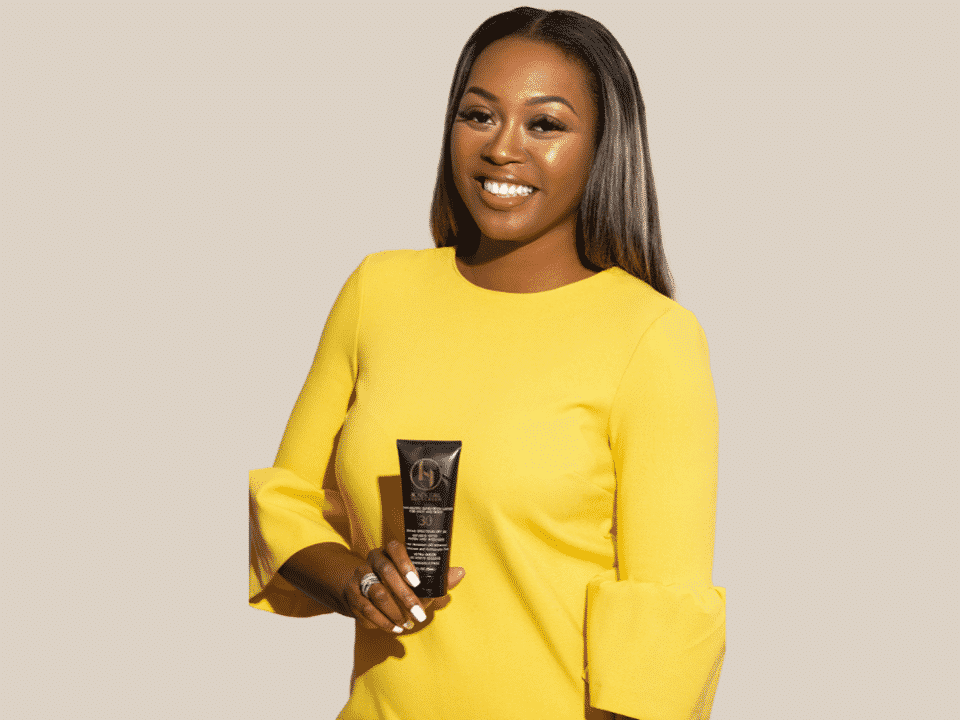
When the COVID-19 pandemic first hit the United States, business owner Shontay Lundy refused to let her company suffer the economic devastations that could come.
Lundy owns a small sunscreen company called Black Girl Sunscreen, which is run by five people. Now, as businesses begin to open back up in the United States, Lundy has successfully secured a million-dollar investment from a private female funding source.
Lundy founded Black Girl Sunscreen in 2016 when she decided that the world needed a sunscreen that specifically catered to women of color. The sunscreen uses all-natural ingredients, avoids harmful chemicals and is made to apply without streaking. The company has accumulated much success since it opened in 2016, but Lundy knew the company had to improve their strategy in the face of a pandemic, as businesses owned by women of color are given very little funding.
The Black Girl Sunscreen team decided that the best way to keep business afloat was to boost the company’s social media presence and marketing strategy, working overtime to accomplish their goals. Since this improvement, Black Girl Sunscreen received a tremendous boost in online sales, persuading them to release a new product in the near future.
The sunscreen company’s marketing campaign for an inclusive sunscreen has also earned Black Girl Sunscreen a full-time spot on Target’s shelves in 200 locations, the only indie product to be carried at all times by the chain. The company currently sells an SPF 30 sunscreen and an SPF 50 sunscreen for children.

By Sarah Jester and Kaela Roeder
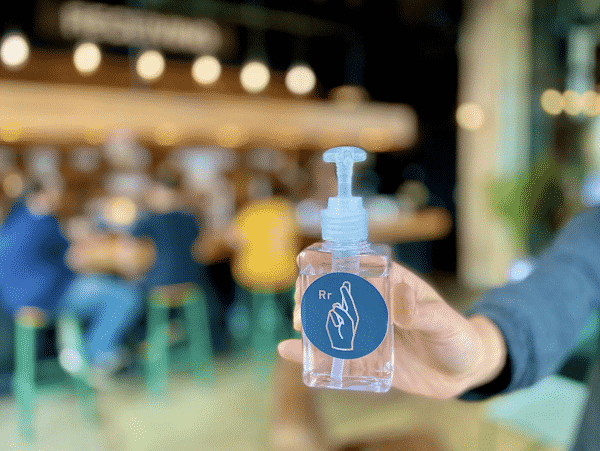
As the spread of coronavirus increases, bottles of hand sanitizer and other cleaning supplies have rapidly disappeared off the shelves of grocery stores and pharmacies in nearly every state. Thankfully, a local D.C. distillery has come up with an innovative solution to combat this problem. Certified LGBTBE® Republic Restoratives Distillery has begun making and packaging bottles of hand cleaner to be distributed for free to D.C. residents who purchase alcohol for delivery. This is the story of yet another innovative, compassionate Certified LGBTBE® using their expertise to help others in a time of need.
“We’re facing such an incredibly devastating time ahead that anything we can do to change the dynamic for us and for other members of the D.C. food and beverage community, we’re doing,” owner Pia Carusone told the Washingtonian.
Republic Restoratives is one of the only self-distributing distilleries in D.C., which certainly comes in handy during a time when social distancing is necessary for the health of the public. Now, each time your order is delivered to your doorstep by a Republic Restoratives team member, a bottle of their hand cleaner is included. You can place an order for alcohol delivery any day of the week on Republic Restoratives’ website.
Recently, Republic Restoratives was commissioned by the D.C. government to produce thousands of gallons of hand sanitizer that will be given directly to first responders and other essential workers that are most at risk. Here, D.C. is setting an important precedent by turning to small businesses in times of need.

Outlier Automation LLC is an industrial automation integrator in themanufacturing space which is in the process of obtaining its certification from NGLCC.
The company provides a variety of engineering services, including programming automated machines that fill pharmaceutical vials, irrigate farms, or run processes for creating plastics. Outlier Automation also works with industrial customers to add equipment to their facility that makes their workers safer while performing product assembly.
Now, the company is providing assistance during the COVID-19 pandemic by producing hand sanitizer.
“We’ve been proud to lend our skillset to produce such a large volume of hand sanitizer in a short amount of time and with a completely grassroots effort,” said Brooks-Zak.
 Outlier Automation joined a group of engineers and business owners to produce hand sanitizer through a group called COVID-19 Response LLC. Sandymount, a colleague of theirs, owns a beer processing company that had the idea to use their facility to blend and supply hand sanitizer to help meet the sudden demand.
“He was looking for others to help out, and we at Outlier had been thinking of ways to help in this pandemic, so we were excited to join the effort,” Brooks-Zak said.
The team quickly realized that the volume of supplies needed was much greater than initially anticipated. Outlier Automation heard not only from grocery stores, but from hospitals, police departments, and other first responders who were in critical need of hand sanitizer.
“Our intention behind the project has always been to help our communities, so we agreed that when the pandemic dies down, we will dissolve the LLC and donate profits to charities involved in economic rebuilding efforts,” said Brooks-Zak.
If you’d like to work with Outlier Automation, reach out to [email protected]. If you are in need of hand sanitizer, following the FDA-approved recipe, the company can put you in touch with their distributor.


This past weekend, the United States made history when Elon Musk’s SpaceX launched the Dragon Crew capsule into space, the first U.S. mission from U.S. soil since 2011. SpaceX is primarily associated with Musk, as he was the founder of the company, but many people don’t know about the company’s president and chief operating officer, Gwynne Shotwell.
Now responsible for SpaceX’s operations and growth, Shotwell has been working with SpaceX since the company was founded in 2002 and was immediately put on the board of directors. She earned her bachelor’s and master’s degree in Mechanical Engineering and Applied Mathematics from Northwestern University and previously worked with The Aerospace Corporation and Microcosm Inc. in El Segundo, California. Wanting to apply her skills in engineering in a hands-on environment, Shotwell worked with The Aerospace Corporation in military space research, technical work, spacecraft design and thermal analysis. She spent much of her time specifically studying small spacecraft design and how to navigate such a spacecraft in and out of the cosmos. She later went on to work Microcosm Inc, a rocket building company, where she oversaw business development.
Having both the skills and knowing the ins and outs of spacecraft and business, Shotwell’s expertise at SpaceX still stands. Under her supervision, SpaceX has launched five billion dollars’ worth of crafts with the Falcon vehicle family and has now become the first privately owned business to send astronauts into space. Additionally, Shotwell recently became a member on the board of directors for Polaris, an automotive vehicle manufacturing company, and serves in many STEM-related programs. Her work in these areas have earned her several awards, including a spot in the 2012 Women in Technology Hall of Fame and as one of Forbes’ Magazine’s Top 50 Women in Tech.
Through all of her successes, it seems as if Shotwell has more large-scale accomplishments to come. As part of a multi-billion dollar deal with NASA, SpaceX will continue to work on a transportation system to take the first humans to Mars.


By Sarah Jester
Change does not occur on its own. For progress to be made, a changemaker must step forward and take action. That is precisely what Certified LGBT Business Enterprise® owner Andrea Ruiz-Hays has done throughout her career, both in the environmental sustainability space and now even more so in an effort to save lives during the COVID-19 pandemic.
Ruiz-Hays has two decades of executive leadership experience at Walt Disney World Resort, where she pioneered sustainability efforts. Following her departure, she realized that she still had more to give to those around her.
“I personally have been passionate about our environment since I was a young child,” she said. “I had that longing to want to help communities not only set targets but help them implement them in that space. Let’s do what’s good for your business and for the environment.”
Out of this longing grew Eco Strategies Group, a Certified LGBTBE® sustainability consulting firm. Through her firm, Ruiz-Hays consults for corporations, organizations, and entrepreneurs to help them virtually outline and implement sustainability strategies and plans.
In recent weeks, businesses across the nation like Ruiz-Hays’ have seen operations grind to a halt with the growing spread of COVID-19. Yet, she has found a significant way to continue to make change in the world - one that could save lives.
“I saw an interview online with the CFO of a hospital who was showing how to make cloth masks because they were admitting that they were low on supplies,” she explained. “I thought to myself, ‘My gosh, I could do this!’”
Before last year, Ruiz-Hays had not touched a sewing machine since she was in middle school. This past fall, she happened to see that her local library, the downtown Orlando branch of the Orange County Public Library, was offering a free class that promised to teach participants how to sew Harry Potter robes. Two completed robes later, she had armed herself with knowledge that is now proving to be extraordinarily valuable.

“I kept hearing about the lack of resources for common personal protective equipment materials and that our healthcare professionals didn’t have these,” Ruiz-Hays said. “Later on that night, I talked to my wife and I said, ‘I think I need to get the machine out tomorrow.’”
After studying up on recommended mask materials, Ruiz-Hays purchased as many mask supplies as she could from her local Joann Fabrics, including over 50 yards of a cotton-poly blend known for its breathability and effectiveness at filtering out microscopic particles. Some nurses are now providing Ruiz-Hays with polypropylene halyard, a material that is used to wrap sterile utensils in medical facilities. An anesthesiology team in Florida is also repurposing this material for masks.
“Nurses have been sending me pictures of used masks that have been doused in chemicals sitting in a plastic bag, hoping that they’ve been sanitized,” she explained. “So what I’m making and what other people are making is washable and dryable.”
Ruiz-Hays says that the material she purchased will make about 1,000 additional masks.
“The first few were a little fumbly,” she said. “Then it was taking 15 to 20 minutes per mask; now it’s taking me about 5 minutes per mask. I’m now making about 50 masks a day.”
Ruiz-Hays began posting her completed work online and received a massive response. She then had the idea to connect other individuals that wanted to sew masks with healthcare professionals medical facilities that were accepting them. From this notion sprung a Facebook group that now has over several hundred members from across the nation and has been growing rapidly each day. It’s called Million Mask Challenge - We NEED YOU! In it, group members have been posting sewing tutorials and their completed work, as well as maintaining a running log of hospitals, facilities, and healthcare professionals across the country that are accepting homemade masks.

“If you have a machine, get it out!” said Ruiz-Hays. “I’m willing to have video chats with people to show you how simple this is. I have non sewers that are helping with logistics - just because you can’t sew doesn’t mean you can’t help!”
This mindset carries over into Ruiz-Hays’ plan for her business going forward.
“The biggest area of opportunity is entrepreneurs, because they’re hit the hardest,” she explained. “It shouldn’t be just Fortune 100 and 500 companies getting the access to these answers and resources to implement sustainability practices.”
In this time of uncertainty, Ruiz-Hays wants to keep her focus local.
“If I can show local business owners how to save on their costs, be operationally efficient, and be good for the planet, that’s great,” she said. “How can they reopen their shop? What can I do?”
What can YOU do? Check out the Million Mask Challenge to find out. And for additional ways to help you, your business, and the LGBT community during this time, visit the NGLCC COVID-19 Resource Hub for the LGBT Business Community.


Join our speakers as we discuss how to ensure emotional, physical and mental self-care as we embark on the new normal for professional and home life.
Featured speaker Taraji P. Henson, Nic Cober Johnson, Author and Business Strategist; Jenniffer González-Colón, Congresswoman of Puerto Rico and Dr. Sherry Blake, Therapist and Mental Health Expert, discuss this important topic on June 3, 2020, 1-3pm EDT.
Get the details and how to register here.


