


According the U.S. Small Business Administration, mentors help small businesses to improve their chances of success and longevity.
They report that 70% of small businesses that received mentoring were still open five years later, which is a typical benchmark. Additionally, they report that in the same survey, 88% of business owners say that having a mentor was invaluable. Those who have excellent mentors can now nominate them to be recognized for their great leadership in Entrepreneurs of Success’ program, “Leaders of Impact.”
“There are so many excellent mentors out there who help lead entrepreneurs toward success,” explains Sara Khoudary, founder of Entrepreneurs of Success and the Mentor Momentum Community. “It’s time that they get the recognition they deserve, and we are going to help them do just that. We look forward to the nominations, selecting the winners, and sharing their words of advice with the world.”
A mentor is someone who guides you, helps you move past challenges, and provides you with the listening and feedback that is so often needed in the entrepreneurial field. Mentorship is often considered to be the missing link that businesses need. Those who have had a great mentor can nominate them for the “Leaders of Impact” recognition program, sharing how they have helped make an impact and leave a legacy.
Entrepreneurs who have had a great mentor can share how the person encouraged them, helped their business, and what that type of support has done for overall impact. Winners will be recognized in a virtual event in June 2021, they will be featured in their Mentor Momentum Community, and they will get to participate in a live event, have the option to become a honorary contributor to the community, be added to the website as a “Leader of Impact,” and become eligible to be nominated for the annual “Marion Award.”
“Think about who it was that helped you, guided you, and supported you along the way,” added Khoudary. “Now is the time to give back to them with this nomination so they are recognized for their selfless contributions. It’s an honor to be nominated for such an award, and an even bigger honor to be selected as a winner.”
Entrepreneurs of Success offers memberships to entrepreneurs, providing them with tools that will help them be more successful. In addition to joining a networking group like this, here are some additional ways that entrepreneurs can increase their chances of being successful with their business ventures:
This nomination opportunity will put a spotlight on great mentors who have a desire to leave an impact and legacy for their contributions. They are people who want to see others succeed and are happy to share what they know with those who need the guidance. Nominations for the “Leaders of Impact” award program will be accepted through April 9, 2021. To nominate a great mentor, visit the site at: https://entrepreneursofsuccess.com/leaders-of-impact/.
About Entrepreneurs of Success
A community of seasoned successful mentors, Entrepreneurs of Success is focused on helping people to succeed. The community provides the guidance and contributions that help businesses succeed, overcome challenges, and become supercharged. The mentors provide insight, motivation, and share proven methods to take a business to the next level. To get more information about the company, visit the site at: https://entrepreneursofsuccess.com/.


By: Tawanah Reeves-Ligon
Tracee Ellis Ross is not new to titles or attention.
She is the second daughter of the legendary Diana Ross, a nine-time NAACP Image Award winner, a four-time Primetime Emmy nominee and a Golden-Globe recipient. She’s been recognized as a director, producer, philanthropist, social activist, fashion icon (for which she won the 2020 People’s Choice Award), founder of the haircare line, Pattern which caters to curly, coily, tight-textured hair, and, as of this past February, the Diversity and Inclusion advisor for Ulta Beauty. When it comes to owning her power, Ross has practiced what she preaches. “I am learning every day to allow the space between where I am and where I want to be to inspire me and not terrify me,” says Ross.
Diligent about Diversity in Workspaces
Due to her main career as an actress, many believed Ross would be limited in her desired business ventures. “When I told a member of my team some years ago that I wanted to start a haircare line, their idea was to start a line of wigs!” she told Fast Company this past January. She took many early rejections and was even told by another associate during her early planning stages that, since she is an actor, who would want to buy haircare products from her? Ross went on to offer some powerful advice for those encountering this type of criticism, doubt or rejection, “Be patient, and stay the course,” she counsels other entrepreneurs. “Take in the information. Take in the disappointments. They will come. They are important. They are part of the opportunity to clarify what you want to do.”
She continued to press forward despite roadblocks and inexperience. Last October, Ross talked more about this during the U.S. Bank’s Women and Wealth Summit, “I did not know how to negotiate on my behalf. I did not know how to talk about money,” which is still a common phenomenon, especially in American society. “Culturally, women are not taught to talk about money. It is thought to be gauche, to talk about money, to be ambitious,” she says. “Patriarchy, racism, sexism, all of these things, have given the very clear message that women are meant to not take up space and not rock the boat.”
Since launching, Ross has put her naysayers to shame. On its first day, the site yielded nearly eight times the expected sales, and its Instagram following grew to 130,000 within a week. Ross saw how underpenetrated the Black haircare market still remains. According to a 2018 Nielsen report, the Black haircare industry made an estimated $2.5 billion, showcasing that there is considerable opportunity for Black-owned businesses like Pattern to enter the mainstream market. This is exactly what Ross hopes to see happen as the new Diversity and Inclusion advisor for Ulta Beauty. She told BusinessWire, “This work requires commitment and accountability from Ulta Beauty to ensure measurable goals are achieved. I am hopeful and optimistic our work together will create foundational change.” According to Ulta CEO Mary Dillon, the company is “deeply committed to leading purposefully with and for underrepresented voices across retail and beauty on our D&I journey.”
It’s Ross’s goal to support and uplift current and future brands, suppliers and companies created by and for people of color sold at Ulta as well as to assist the company in developing diverse and inclusive leadership as well as in their supply chain. They are committed to joining executive diversity and inclusion council summits quarterly. “For so many years, there had not been products for women who wanted to wear their hair naturally and didn’t want to put heat on it or hold themselves up to a white standard of beauty,” shared Ross with InStyle.
She also told them, “I walked into my relationship with Ulta as a person who always was looking to create a more equitable space for women, for Black people, for people of color across the board. It’s something that is my guiding force and mission in my acting career and my producing. That is how I move through the world, so it was no different in the beauty industry. And it’s one of the reasons I decided to go with Ulta. Mary Dillon has been focused on and fighting for inclusion and diversity at Ulta from when I started my relationship with them, and none of that has changed through all of this.”
Commitment to Personal & Professional Growth
The actress has had a stellar career from playing lawyer Joan Clayton in the critically-acclaimed show “Girlfriends” in the 2000s to Dr. Rainbow Johnson in the award-smashing “Black-ish” and most recently Grace Davis in her biggest film yet [that also showcased her singing debut], “The High Note.” However, it has not always been simple or easy. Ross had to find her own way in Hollywood without falling into the shadow of her famous mother. She’s also felt the challenges of being a woman (especially single and childless) in a ruthless, patriarchal industry still holding on to antiquated social ideals. As Ross explained in a past interview with Oprah, “My worth just gets diminished as I am reminded that I have ‘failed’ on the marriage and carriage counts,” adding she spent “many years waiting to be chosen” until it occurred to Ross that her power to be happy relied solely on her. “Well, here’s the thing – I’m the chooser,” she said.
Ross uses her platform and her projects to help other women feel comfortable with choosing their own power verses yielding it to others.
During her 2020 People’s Choice Award speech for Fashion Icon of the Year, she explained, “I spent years playing dress up in my closet as a way to find some freedom or some power, and the more that I discovered who I really was - the more I was able to hone my creative expression through clothing. I wear my insides on the outside, and if featuring Black designers at the American Music Awards helps someone see the power of Black artistry, or if joining the call to wear black at the Golden Globes led to solidarity with women saying time’s up on sexual harassment, then you heard me loud and clear…”
On an episode of the podcast, Can’t Stop Watching, she mentioned pushing back against outdated gender norms in her portrayal of Rainbow. “What I did speak up about from the beginning was, ‘Why am I carrying laundry?’ ‘Why am I the person in the kitchen cooking right now, when this has nothing to do with the scene?’…And I started coining them as ‘lady chores.’ ‘Why am I doing the lady chores?’ ‘Can’t Anthony [Anderson] do the lady chore?’” She was adamant that this role shouldn’t mimic the usual “sitcom wife” and that society can benefit from this kind intentionality in our programming.
“I don’t believe they’re ‘lady chores.’ I believe they’re house chores.
And I don’t believe that we should assume, because I believe every relationship is a negotiation between two people about what each of them feel comfortable doing, and I think the more that we portray that on television, the more that that becomes the reality out in the world, or matches the reality that the world actually is,” she said.
On Power, Politics & Progression
We connect to our personal power in so many ways and on varying levels. One issue that Tracee Ellis Ross advocates we should focus our power on is promoting positive social change in our government, specifically through activism and the vote. Ross was included in the 2020 Democratic National Convention lineup and spoke to Geoff Edgers, of the Washington Post, previously on what it was like when she was first asked to assist the DNC during the Obama administration as well as the relevance of her platform. “…I don’t think I knew at that time how personal politics were. They felt like something that was out of my reach. So for me, the [2020] DNC felt like a sort of an evolution from where I already sit. The career I have is about storytelling, but I’m more than an actor. I’m a producer and a founder of a hair company and a CEO. I’m an American citizen. I’m a black woman,” shared Ross.
These different, but inclusive, identities drive her pleas to other black and women voters to harness their powers and use their voices to bring about necessary changes in this continuously discriminatory and marginalized society. “It takes a lot of courage to advocate for yourself. As a woman, and as a Black woman, advocating for yourself is actually a form of resistance. It is how each of us push the world, to make sure that the real estate matches the reality of who we are and what we deserve,” Ross said in a chat with fellow Golden Globe-winner Kerry Washington for Elle this past August.
“And every courageous act that a marginalized person takes opens up a space for somebody else,” she continued. “…The system is mirroring back a powerlessness. That’s not the truth, but we so often believe in the system—because how could you not?—and you think that’s the truth.” She went on to discuss the value of power in community. “That is one of the ways that the system keeps you powerless. The system says, you’re alone in this, it’s only you. The more that you link arms and realize the fellowship that occurs in the same feelings, the more power you have.”
As for her haircare line, Ross to InStyle she believes her company to be “inherently political, because the celebration of Blackness in the face of racism in and of itself is a political act of resistance.” Pattern supports multiple related initiatives such as the Crown Act, the African American Policy Forum and United Way Worldwide, specifically as it relates to their programs helping Black communities which have been disproportionately affected by COVID-19.
Ross told Yahoo Finance this past December, “Particularly during this pandemic, it was a little scary. And I think so much of what’s happened in this very unprecedented time has really reinvigorated my mission for the company, my intention and my promise of the brand.” Ross, with her tenacity and graceful perseverance, reminds us to be unapologetic with how we acknowledge and use our inner power. It is our own. Without our permission, our power cannot be taken; it cannot be shaken; it cannot be broken.

By Niamh Lewis, ESPN
Twelve years ago Chloe Targett-Adams joined Formula One as a corporate lawyer, and is now the sport’s director of global race promotions.
When she walked into the office for the first time, there were more women present than anywhere else she had worked, and it was the first time she had a female boss — Sacha Woodward Hill, who joined F1 in 1996 as a general counsel.”That was in a time when it [F1] was known to not have any women in it,” Targett-Adams told ESPN. “It was a mixed perception even then.
Photo by Clive Mason - Formula 1/Formula 1 via Getty Images
“We know in the past there were female drivers, although sadly not for many, many years. Whether it’s a female thing or not, there’s not many of us in public facing roles, if any. I think that’s always, for me, one of the most interesting things about Formula One.
“As much as there is still to do, there was a real base of women and that’s something that is really important for us to remember. There are all these incredible women who really paved the way before us, whether that was from a commercial side and marketing and PR, legal or business, and even a bit on the engineering side and a little on the driving side so what that shows to me is F1 is not necessarily discriminatory against women.
“It’s just that we’ve not done enough to really open up access and showcase women working in the sport that there always has been, that actually it is a really great place for women to work and to build a career.”
But an ESPN survey can reveal the extent of the lack of women within the sport. Although 38% of Formula One Management’s 569 employees are female, data from teams is substantially lower.
On the public-facing side (discounting grid girls, whose role in the sport was revised in 2018) there have been few women in the sport’s 70-year history. The last woman to drive in a grand prix was almost half a century ago. Three women have been involved as development drivers within the last eight years but none have got further than a first practice session.
Other than drivers, only two women have managed teams, and neither are still working in the sport.
ESPN surveyed all 10 F1 teams on how many women are in senior roles within the team, and of the race team — the core performance group who travel to grands prix — what percentage are women:
Mercedes has the biggest workforce with around 1,000 employees. 117 of those are women, and 31% are in senior roles. In Mercedes’ core race team of 65 people, four are women, and of a further 20 people working at the factory in the race support team, four are women (20%)
Haas, who are the smallest team on the grid — a fraction of the size of Mercedes, employ 167 people, 15 of whom are women (9%)
McLaren have 66 people who regularly travel in the race team, five are women, and one woman is in a senior management role
Alfa Romeo said like all teams the size of the race team varies, but on average there are 51 people regularly travelling to races, of these five are women (9.8%). As for the F1 side of the company 13 women work in senior roles
Red Bull, Ferrari, and Williams did not respond to ESPN’s survey. Aston Martin and Alpine said they were unable to provide the requested information, and Alpha Tauri said: “Whilst we do have a high level of females in senior roles here at the factory we don’t have in the race team.”
There are women who work as engineers, directors, in marketing and hospitality for teams and across the F1 business. The numbers are small, but they have important roles.
On Alfa Romeo’s pitwall is senior strategy engineer Ruth Buscombe, who says although she was inspired by legendary F1 engineers Paddy Lowe and James Allison, a female engineering role model was missing.
“I think that was one thing I was really missing — although there were women working in Formula One you couldn’t see them, and it’s very difficult to be what you can’t see,” Buscombe told ESPN.
“Rather embarrassingly, I went from wanting to be a princess to wanting to be a Formula One engineer, there was no happy middle. I always loved maths at school and enjoyed the problem solving part of it. When I realised you could do maths in sport and competition that was the coolest thing in the world for me. My focus then was doing the subjects that people who went into F1 did.
“I was very lucky that when I turned up to secondary school aged 11, my maths teacher’s daughter was studying engineering at Cambridge and she was my hero — I was like ‘if she can do it then I can do it’. She went on to be a pilot and is a brilliant lady, she is maybe not as famous a name as James Allison, but Emily Todd was my inspiration.”
Mercedes’ wind tunnel technician Dr Kathryn Richards told ESPN her venture into studying STEM subjects, and subsequently F1, started when her aunt took her plane spotting at an airport. She was hooked, and her father took her to Silverstone in 1986 to watch a grand prix. The seed was planted and she went on to study aerospace engineering, and gained PHD in vehicle aerodynamics.
“I was a big fan of Michael Schumacher at the time,” Richards says. “I wanted to go to the Benetton factory and see the wind tunnels. I wrote a letter and it was picked up by a guy called Willem Toet [Australian F1 aerodynamicist and now sales manager at Alfa Romeo] and he replied and said yes, come along and bring a guest.”
As Richards comes towards her 16th year at Mercedes (formerly BAR-Honda when she joined), she says Toet’s support when she was starting out as a student was key: “If it hadn’t been for him I wouldn’t be where I am today.”
Of the women ESPN interviewed, there were mixed responses on how aware they are of gender bias on a regular basis.
Steph Carlin, commercial manager of Formula Two team Carlin, told ESPN it just takes one comment to be reminded of inequality.
“For the majority of the time, it’s a really rewarding job so I don’t see myself as a woman in a male dominated industry, I just feel like most of the time I’m trying to do the best job I can,” she said.
“We have 15 drivers at Carlin and that’s different every year, and different driver managers, and then all of a sudden you’re woken up with a bit of a jolt when somebody would prefer to speak to Trevor [Carlin, team founder] instead of me. It doesn’t happen very often and most of the time I don’t even think about being in a male-dominated environment but every so often, maybe once a year, there will just be somebody who would like to speak to Trevor because he’s the person they feel they need to speak to and normally Trevor will say ‘no Stephanie will deal with that.’
“It’s only when you have conversations like this and you look around and how many other women are there at a management level in racing, it’s still quite rare.”
For Richards, being the only woman in her department and the only wind tunnel technician in the sport doesn’t bother her. At Mercedes, she has a few aerodynamicists who are women for company. But she has inspired more women to study STEM subjects and taken on women for placements and work experience with the hope there will be more coming through.
“I’m quite used to it now actually, it doesn’t really bother me,” she says. “When I went through college there were women on my course so I’ve been quite used to it since an early age and I just accepted it straight away when I started. I’ve never had any problems, I get on well with guys, I’m almost like one of the guys and sometimes act as them as well but I don’t have a problem.
“I’ve managed to get some young females in work experience. One of them wants to be a driver, another wants to be a mechanic. So in that perspective it’s made a difference on some people’s career paths.”
Buscombe says it depends who you’re surrounded by. “Certainly in Alfa [Romeo] it’s definitely not a factor, when I was hired the team principal was a woman [Monisha Kalternborn who departed in 2017] so you can really see the environment there. They just want the best.
“I think there is [an unconscious bias]. I think if you asked everyone in F1 and their results were anonymous they probably would say as a result of their upbringing they have to challenge their own beliefs and their own perception of what makes an engineer.
“That’s not necessarily just male, it goes for women, we all need to make sure we don’t walk into a room with subconscious bias and create opinions about someone because of the way they look, the colour of the skin, what they believe or who they love, and it’s a unanimous problem that all sports and companies have. It’s only going to get better if everybody checks their privilege at the door and focuses on being aware of bias and once you’re aware of it you have a chance to challenge it.”
How important is it to have a public-facing role model, like a driver? Targett-Adams says: “I think it’s really important because the more visible females you have in Formula One, the more obvious it is for a young girl to show that that is something that’s possible from any background that you don’t think, ‘oh, that’s for other people’. And it’s that it’s about inspiring the next generation, isn’t it? But also about creating those opportunities.”
F1’s director of marketing Ellie Norman told ESPN: “The most visible role is your driver and your team principles, but there are so many other roles, whether it is engineering or it’s marketing, there are lots of strong female role models leading and driving a lot of the business in Formula One.”
“We see more and more talented women in all roles throughout the paddock now. And in 2021 we have W Series joining so they’re going to be at eight events across this year. The role that W Series can play in women joining that racing triangle, because one of the brilliant things about F1 where it’s different to other sports is there isn’t a women’s team, so from a competition perspective, women have always been able to race against men and it comes down to: how good are you?”
How good are you, but also how much money do you have? Formula One is an exclusive sport and requires huge sums of money to compete.
“That in itself is a huge barrier for people of all backgrounds — that needs to be addressed. Scholarship system for all talent,” Carlin says.
“There’s nothing wrong with transparency and honesty,” Targett-Adams says. “No one is trying to hide away from anything. This is where we are and this is where we want to get to, so there’s a good start. Let’s not celebrate it [the lack of diversity], because you can always do better, but let’s acknowledge it.”
Read the full article at ESPN.


Precious Lee, a Black fashion icon from Atlanta, Georgia, sat down with Good Morning America to reflect on her historic achievement as one of the first plus-sized models on the Versace runway. The trailblazer, who was one of three plus-sized models to make history at the runway show in Italy last year, said she was overcome with emotion before her interview last week.
“I’ve always imagined myself on that runway,” Lee said. “I’ve always adored Versace. I grew up in a Versace home. We always loved Versace as a family.”
When she took the stage in Milan, Italy, the 31-year-old said she was thinking of her sister, who was also a model, according to Allure.
“The show was the day before her birthday,” Lee said. “Anytime I have a really big moment or just when I’m feeling the need for the energy of my sister — I felt her right before I was about to go out.”
As she relied on the energy of her sister while waiting for her turn to walk, Lee heard another comforting voice.
“I’m so focused and all of a sudden I was about to cry and then someone backstage was like ‘you’re the most beautiful woman in the world. Go!'” the Georgia native said. “I turned the corner and I zoned out and I started to float.”
In the midst of the momentous occasion, Lee became more grateful for all the support she received during her journey.
“It was an acknowledgment of how supported I’ve been,” she said. “It was such a proud moment of arriving at an actual dream.”
Lee has also made history as the first Black curvy model to appear on the cover of Vogue, according to her biography. Additionally, she’s appeared at New York Fashion Week for designers Christian Siriano, Tommy Hilfiger and Matthew Adams Nolan. Lee has also been featured in other magazines such as Glamour, Paper Magazine, V Magazine, Harper’s Bazaar, and M Le Monde.
Read the full article at Blavity.


Imposter syndrome is loosely defined as doubting your abilities and feeling like a fraud. It disproportionately affects high-achieving people, who find it difficult to accept their accomplishments. Many question whether they’re deserving of accolades.
Talisa Lavarry was exhausted. She had led the charge at her corporate event management company to plan a high-profile, security-intensive event, working around the clock and through weekends for months. Barack Obama was the keynote speaker.
Lavarry knew how to handle the complicated logistics required — but not the office politics. A golden opportunity to prove her expertise had turned into a living nightmare. Lavarry’s colleagues interrogated and censured her, calling her professionalism into question. Their bullying, both subtle and overt, haunted each decision she made. Lavarry wondered whether her race had something to do with the way she was treated. She was, after all, the only Black woman on her team. She began doubting whether she was qualified for the job, despite constant praise from the client.
Things with her planning team became so acrimonious that Lavarry found herself demoted from lead to co-lead and was eventually unacknowledged altogether by her colleagues. Each action that chipped away at her role in her work doubly chipped away at her confidence. She became plagued by deep anxiety, self-hatred, and the feeling that she was a fraud.
What had started as healthy nervousness — Will I fit in? Will my colleagues like me? Can I do good work? — became a workplace-induced trauma that had her contemplating suicide.
Today, when Lavarry reflects on the imposter syndrome she fell prey to during that time, she knows it wasn’t a lack of self-confidence that held her back. It was repeatedly facing systemic racism and bias.
Read the full article at HBR.

By Stephanie Asymkos for Yahoo Money
Even before the pandemic, Americans were fleeing populated states like New York and California to escape high taxes and expensive housing. Remote work has since enabled a segment of workers to tap into the benefits of lower costs of living with gainful employment in smaller cities.
WalletHub evaluated 182 of the most-populated U.S. cities — including at least two of the most populated cities in each state — by analyzing 32 metrics. Each city was assigned a score based on job opportunities, employment growth, starting salaries, and socioeconomic indicators like median income, housing affordability, and safety, along with an overall score. Additionally, COVID-19 metrics were added to this year’s rankings, and the measures for weekly cases and mortality were weighted more over commute times and transit accessibility.
“This year is more of an anomaly than last. We’ve been doing this study now for five years and we do see a lot of the same cities in the past 10 or 20,” Gonzalez said. “This year, we saw a little bit of a shakeup.”
Recent data from the Census Bureau indicates that moving levels are at a 72-year low and more people are searching for remote-work opportunities. But uncertainty about working in general remains and that could be what’s precluding the masses from picking up and moving.
The pandemic’s cruelty has been evident in the U.S. job market. While unemployment has rebounded from 14.7% in April to 6.7%, President Trump’s term ended with 3 million fewer jobs than when he started in 2017. The economy still needs to add at least 9.8 million jobs to be back to its pre-pandemic levels.
With people largely staying put, Gonzalez predicts offices and workspaces will pop up in smaller cities to accommodate booming job markets and those looking to return to office life.
“We won’t see people really moving for new opportunities for quite some time,” she said.
Read the original article at Yahoo Money.

By Forbes
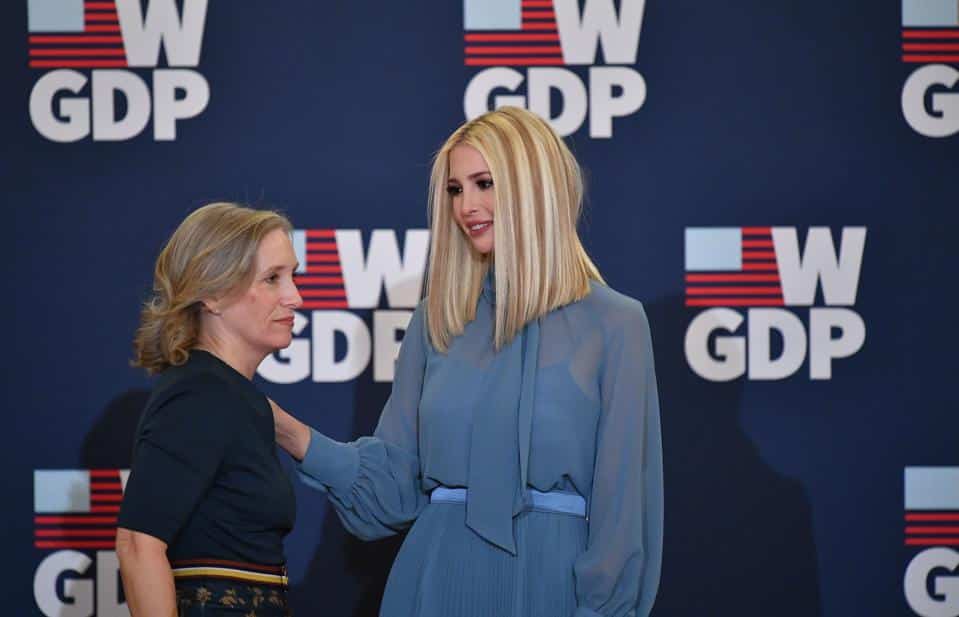
Days before leaving office, the Trump Administration has created a new network of women in business that aims at implementing the Abraham Accords, a series of normalization agreements that were signed between Israel and the United Arab Emirates and subsequently Bahrain and other countries, backed by Washington.
The initiative, called “United Women’s Economic Development Network” is part of Ivanka Trump’s flagship work in the White House, the Women’s Global Development and Prosperity initiative, and was spearheaded by Kelley
Currie, Ambassador-at-Large for Global Women’s Issues, and Aryeh Lightstone, a recently-appointed Special Envoy for Economic Normalization.
The network is one of the Trump Administration’s last efforts to promote the Abraham Accords and its work in the Middle East before the end of the Presidency—but it’s unclear what is going to happen to the initiative once a new administration is in the White House.
“Following the signing of the Abraham Accords in September 2020, signatory parties have worked to establish across the region a warm peace, inclusive of all, and to develop new cross-country economic partnerships,” a press release issued by the White House on Thursday said. “In pursuit of those goals, the advancement of women’s economic empowerment has come to occupy a role of central importance.”
According to the White House, women entrepreneurs from the United States, Bahrain, Morocco, Israel, United Arab Emirates, Sudan, Uzbekistan, and Kosovo took part in the launch of the initiative. A group of about 40 women attended the event, including Dr. Shaika Rana bint Isa Alkhalifa, Undersecretary of the Ministry of Foreign Affairs of Bahrain, and Netta Korin, co-founder of Israel’s largest blockchain infrastructure company Orbs.

A new law that took effect this year tries to ensure “equal pay for equal work” by allowing for more transparency around salaries.
Remember when water coolers were something you could talk around with your coworkers?
One topic that was taboo: salaries.
That’s not the case anymore with a new Colorado law that took effect this year to tries to bring “equal pay for equal work.”
“I was probably being paid anywhere from $50,000-$80,000 less than my colleagues,” said Wendy Rockwell, who fought for equal pay at her company. “It was five years where I felt that something was off. And in the company, we were not allowed to speak with our colleagues about their income and about their merit increases.”
Rockwell kept a detailed spreadsheet of her pay and accomplishments at work, and realized she wasn’t getting paid for work equal to her male coworkers.
She told some trusted coworkers her salary and got surprised reactions.
“My colleagues, they were horrified because they were like, ‘no, I’m not being paid that at all,'” said Rockwell. “A new colleague shared with me they were $30,000 more.”
Colorado’s “Equal Pay for Equal Work Act” was signed in 2019 but didn’t take effect until Jan. 1.
One of the provisions prevents an employer from retaliating against an employee for discussing salaries with coworkers. That wasn’t the case when Rockwell was trying to investigate her pay disparity.
“No, because then I would have violated the company policy of not discussing,” said Rockwell.
While she was fighting for equal pay, without much success, her company was bought, and the new owners made good.
“When I went to the new company, they put in an emergency rectification of $30,000. Within six months, they’d increased it by $50,000 for me doing the same job,” said Rockwell. “For five years that I was pursuing this and not getting anywhere, it was a loss of about $250,000.”
“Based on today’s wage gap, white women would lose approximately $400,000 over the course of a 40-year career. And for Latinas, the career losses are over $1.1 million, and then for black women, a little over $900,000,” said Lauren Y. Casteel, president and CEO of The Women’s Foundation of Colorado.
Her group helped lobby for an equal pay law for years.
“Equal pay for equal work, it’s not that complicated,” said Casteel. “One of the things that this legislation requires is transparency. And it’s one of the things that makes people anxious, is the transparency about pay, but the value of that is accountability.”
Besides allowing workers to discuss salaries without retribution, the law requires job postings in Colorado to have a salary range posted.
“For instance, if you see your job being posted and you’re not in that salary range, that’s a pretty big key that you’re not being paid fairly,” said Rachel Ellis, managing partner at Livelihood Law, an employment law firm.
Ellis was on the committee that helped write the new equal pay law.
It lists reasons why it would be within the law for a man and a woman to be paid differently.
It would be OK for the wage difference to be based on all of the following:
Read the full article at 9News.

By The New York Times
Training and advancement as a chef can be hard to find in American fine-dining restaurants, according to Black women who have tried.
Eight years ago, Auzerais Bellamy landed what she thought was a big break: a stint as a stagiaire, or apprentice, at the French Laundry, Thomas Keller’s world-renowned restaurant in the Napa Valley. She wasn’t paid for her two days trailing the pastry team, but she saw it as an ideal training ground where, if asked to stay, she could learn from some of the best cooks in the business, sharpening her skills.
“If you want to be a great player you have to be coached well, and I felt like I could be coached well there,” she recalled.
Ms. Bellamy, who grew up in a restaurant family in the Bay Area, had graduated from the Johnson & Wales College of Culinary Arts, and was working as chef de partie at Mr. Keller’s more casual Bouchon Bakery in Yountville, Calif. But when her apprenticeship ended, she wasn’t asked to stay on at the French Laundry. “They said I lacked the technical skill to work there.”
She stayed with Bouchon Bakery, and even moved to New York City to work as a demi-sous-chef at its branch in Rockefeller Center. And when a job as pastry sous-chef opened up at Per Se, Mr. Keller’s East Coast fine-dining flagship, she applied — only to be told again that she needed more experience in the company.
The job was filled by a young Asian woman from outside the restaurant group, said Ms. Bellamy, 30. “They even had her come to our property to trail me to see how things were done companywide.”
Ms. Bellamy eventually left the restaurant business altogether, at one point cleaning apartments. In 2016, after an employer raved about a blondie she’d made, she started a Brooklyn bakery, Blondery. Looking back, she says she isn’t sure her experience could have been different.
Read the full article at The New York Times.

The coronavirus pandemic has turned the U.S. economy and workforce upside down. Once again, gender inequality in the labor force rears its ugly head.
Over the past nine months, millions of Americans have lost their jobs or seen their income drop substantially. But according to a CNN report based on data from the U.S. Bureau of Labor Statistics, women have taken a harder hit than men.
As of November 2020, women held 5.3 million fewer jobs than they did when the pandemic started in February. Men, by contrast, only had a 4.6 million job shortfall. All told, women are down a good 700,000 positions compared to men. And that’s a hit they might struggle to recover from.
Certain industries took a particularly strong beating in the pandemic — notably, restaurants, hotels, and retailers. Women tend to make up the majority of employees in these industries. By virtue of that alone, it’s easy to see why women have lost more jobs than men have.
But let’s not forget that childcare — or a glaring lack thereof — has been a nightmare. And that has also disproportionately affected women. Historically, women have been more likely to give up their jobs to address childcare needs. Women are also known to earn less money than men thanks to the ever-present gender pay gap. As such, it stands to reason that women would be more likely to give up a job in the absence of childcare.
If you’ve lost your job in the course of the pandemic or had to leave the workforce temporarily to care for a child, do your best to maintain your job skills and knowledge base. That means keeping up with industry updates and staying in touch with former colleagues and contacts.
It’s also a good idea to secure some type of part-time work to avoid a dreaded resume gap. If you’re a marketing professional, for example, reach out to local businesses to see if you can do some consulting work. And if you can’t do that work on a paid basis, volunteer — it’ll still be something you can put on your resume.
Financially speaking, you may have a hard time getting by. If you have an emergency fund, now’s the time to tap that savings account — it’s better than racking up debt. If you have equity in your home, you can also look into borrowing against it to generate extra cash. And of course, you shouldn’t hesitate to ask for relief if your income is down. You might be able to lower your monthly credit card payments or get more time to cover your utilities.
Hopefully, the current economic crisis will start to resolve as coronavirus vaccines are rolled out to the general public. Restrictions will ease, schools will reopen, and businesses will begin to rehire workers. Until then, it’s imperative that women do whatever they can to make themselves viable job candidates and avoid getting buried in debt. Men are also struggling during the pandemic, but women seem to be bearing the brunt of it. There is finally a light at the end of the tunnel. However, female members of the labor force will have to work extra hard to emerge unscathed.
Continue to the full article at The Ascent.


“Men age on TV with a sense of gravitas, and we as women have an expiration date,” Roma Torre, 61, stated after her departure as anchor on NY1.
Torre, along with four of her female colleagues, recently settled an age and gender discrimination law suit against the New York cable network, Charter Communications. In the suit, Torre and her co-plaintiffs, Amanda Farinacci, Vivian Lee, Jeanine Ramirez and Kristen Shaughnessy, claimed that their anchor airtime had been reduced and they were excluded from promotional campaigns due to their gender and age.
Why is this not surprising? History has repeatedly demonstrated that women, especially those in the public eye, face the consequences of aging. As a result, actors like Jane Fonda, Dolly Parton, Cher, and scores of others, have felt compelled to alter or enhance their appearance. You may dismiss this as vanity, but that dismissal negates a much more important point. They need to look young and pretty to compete and stay marketable. Their career success and financial security depends on their appearance.
The impact of gendered ageism is not limited to celebrities. In our youth-tilted culture, professional women over 50 face gendered ageism every day. According to a 2018 AARP report, 64 percent of women say they’ve been the target of or witnessed age discrimination. It’s important to note that’s just a tip of the iceberg. It’s estimated that only 3 percent of older workers have ever made an official complaint. Many professional women are afraid to complain about ageist behavior for fear they’ll lose their jobs. And then what? It’s almost impossible to get rehired as a woman over 50.
Read the full article at Forbes.




