

By Tshiamo Mobe, Global Citizen
Climate change is an issue that affects everyone on the planet but women and girls are the ones suffering its effects the most. Why? Because women and girls have less access to quality education and later, job opportunities. These structural disadvantages keep them in poverty. In fact, women make up 70% of the world’s poor. In a nutshell, climate change impacts the poor the most and the poor are mostly women.
Poverty is driven by and made worse by climate change also makes girls more susceptible to child marriage, because it drives hunger and girls getting married often means one less mouth to feed for their parents. Climate change also leads to geopolitical instability which, in turn, results in greater instances of violence — which we know disproportionately impacts women and girls.
Ironically, saving the planet has been made to seem a “women’s job”. This phenomenon, dubbed the “eco gender gap”, sees the burden of climate responsibility placed squarely on women’s shoulders through “green” campaigns and products that are overwhelmingly marketed to women.
There are several hypotheses for why this is. Firstly, women are the more powerful consumers (they drive 70-80% of all purchasing decisions). Secondly, they are disproportionately responsible, still, for the domestic sphere. And finally, going green is seen as a women’s job because women’s personalities are supposedly more nurturing and socially responsible.
Women should be involved in fighting the climate crisis at every level — from the kitchen to the science lab to the boardroom. Ruth Bader Ginsburg explained it best when she said: “Women belong in all places where decisions are being made.” However, women are underrepresented in the science field (including climate science), with just 30% of research positions held by women and fewer still holding senior positions. The Reuters Hot List of 1,000 scientists features just 122 women.
Click here to read the full article on Global Citizen.


By Belva Anakwenze
Given the current state of life as we know it, finances are top of mind for everyone right now. The accounting industry, known for its quick burnout, is included in that conversation. My career started in corporate America, working long days and nights, to ensure the company’s months would fiscally close on time. In addition to the long hours as month-end neared, I felt like a cog in a wheel and undervalued.
Before I decided to leave the corporate machine, I saw numerous peers promoted into leadership roles for reasons like length of service or technical skill. Obviously, technical skills are necessary in a role of leadership, but just as important is emotional intelligence. Very young in my career, it seemed insulting to report to individuals without the interpersonal soft skills to actually lead, inspire and guide human capital in an organization.
As I began to envision my next chapter beyond the corporate machine, I vowed to honor that I was more than my work product or career choice. I approach everything in my personal and professional life by looking at the whole person. I support small businesses to lend to the growth of local entrepreneurs and communities. When I was looking at schools for my children, I wanted an environment that nurtured them socially and emotionally. I have carried this with me throughout my entrepreneurial career.
My greatest test as a leader came in my years as an income tax franchisee. My partners and I operated five locations and dealt with a myriad of obstacles. Some of our challenges were high employee attrition due to seasonal employment, specialized skill set and more. In addition to the core staff, we also hired an array of positions that all needed to be filled at the same time; store managers, experienced tax preparers, outdoor sign wavers who danced and brought visibility to our stores.
We struggled as business owners and leaders until we began to understand that our staff, regardless of role, were not a monolith. We began to lean into the interpersonal side of our staff members. We got to know our employees as the humans they were outside of work. We took the time to understand the personal needs of our high-performing employees. Taking the time to understand the motivators in our team members’ individual lives allowed us to meet them where they needed us.
One person may have been motivated by money, while another would be looking for professional development, and another would be looking just to be seen as a member of the team. Others may have been looking for simple concessions that allowed them to start their shift 20 minutes later than normal one day a week or a host of small asks that could make the world of difference in their personal lives.
Diversity is diverse in the true essence of the word. There was diversity in life experiences, thoughts, desires and more that all led to each person’s unique lens through which they approached life and their job. The diversity in the needs of staff allowed me to grasp the true diversity of a team. I began leading with care and affection, as a mother would.
As leaders, we have to meet those who we lead where they are. That does not mean inserting our wishes or desired outcomes on them, but truly understanding what our team members want, how they show up as their best selves and more.
Some of the key lessons I learned from my experience as a franchisee that I still use and follow to this day are:
Understand what motivates each staff member and use that as a reward
Our team members perform at their best and desire to exceed expectations when they are valued and rewarded in ways that matter to them.
Give team members autonomy to create their own path
Self-efficacy is the best way to have individuals perform up to their potential. When a team member truly believes in their ability and capacity it is easier to reach specific goals.
Work in collaboration
When developing workflow, especially during change and transition, a leader needs buy-in from the team. Give your team space to offer suggestions, feedback and improvements. They will be open about current bottlenecks and improve business efficiency.
Make your team’s job as easy as possible
Invest in technology, training and human capital to help your team. Duplicative work, inefficiencies or stagnation in workflow processes can be extremely frustrating and anxiety-inducing for your team; especially if they want to do well.
Create a company culture where your team can show up authentically
Be kind and nurturing to your team. Remember we all have lives outside of work that are consuming. Have a physiological safe space, so your staff can show up as themselves. The more accepted they are as individuals, the better they will be at work.
A true leader understands the power of undergirding human capital. The most important thing to remember as a leader is that change is inevitable. It is important to handle changes with grace, dignity and humanity.


Whether you’re looking to start a business for the first time or need additional funding for your current work, there are several places to turn to make sure your business is on the financial track to success.
Here are some of the best funding opportunities you should utilize today:
Become a Women-Owned Certified Business
Becoming an official certified woman-owned business is one of the greatest things you can do for your business. Not only will you have access to special scholarships and funding programs, but a certification could open the door to potential partnerships and contracts with big-name companies that can increase your revenue. Certifications also provide opportunities for networking, training, mentoring, counseling and many other resources that can help grow your business. You may even qualify for other business certifications (minority-owned, disability-owned, veteran-owned, LGBTQ+-owned, etc.) that would grant you even more opportunities for growth and success. Look into organizations such as WBENC, NMSDC, NGLCC and Disability:IN to see if you qualify.
The 8(a) Business Development Program
The 8(a) program can be a valuable tool for experienced socially and economically disadvantaged small business owners, who have already been in business for at least two years or more, and are interested in expanding their footprint in the federal marketplace.
Certified firms in the 8(a) program can:
The 8(a) certification qualifies your business as eligible to compete for the program’s sole-source and competitive set-aside contracts. The government authorizes sole-source contracts to 8(a) participants for up to $7 million for acquisitions assigned manufacturing North American Industry Classification System (NAICS) codes and $4.5 million for all other acquisitions.
The Women’s Business Center
Women’s Business Centers (WBCs) are a part of a national network of entrepreneurship centers throughout the United States and its territories that are designed to assist women in starting and growing small businesses. WBCs seek to “level the playing field” for women entrepreneurs, who still face unique obstacles in the business world. Run by the SBA, the WBC provides resources in business training, counseling, federal contracts and access to credit and capital. There are multiple offices in just about every state across the country. Visit sba.gov to find your local WBC.
Women-Owned Small Businesses (WOSB) Federal Contracting program
To help provide a level playing field for women business owners, the government limits competition for certain contracts to businesses that participate in the WOSB Federal Contracting program. This program is specifically designed to fund WOSBs that are surveyed as underrepresented.
There are a total of 759 businesses that fall under this category, and include industries such as:
If you are accepted into the WOSB Federal Contracting program, your business will be eligible to compete for the 5% of federal contracts that are set aside for these businesses. To learn more and to become certified, visit wosb.certify.sba.gov.
Grants.gov
One of the most important resources you can utilize for your business funding needs is Grants.gov. The website showcases hundreds of grants that are available for entrepreneurs and how you can apply for them. Each grant lists detailed instructions on their specific eligibility requirements, application process and funding amounts. You can also filter your search to look for grants specifically for women-owned businesses.
To search through this database, you must register for a Grants.gov Workspace account that will allow for you or other members of your team to begin filling out applications.
Non-Federal Grants
Federal resources aren’t the only way to receive grants. There are many corporations, programs and organizations that give out business grants of differing sizes every year specifically to support women-owned businesses.
Some of the grants you may want to consider include:
For a more comprehensive list of non-federal grants, visit GrantsforWomen.org.
Sources: Small Business Administration, Forbes, Grants.gov


Ngozi Nwanji, AfroTech
The power of an influential social media platform has transformed this couple’s business.
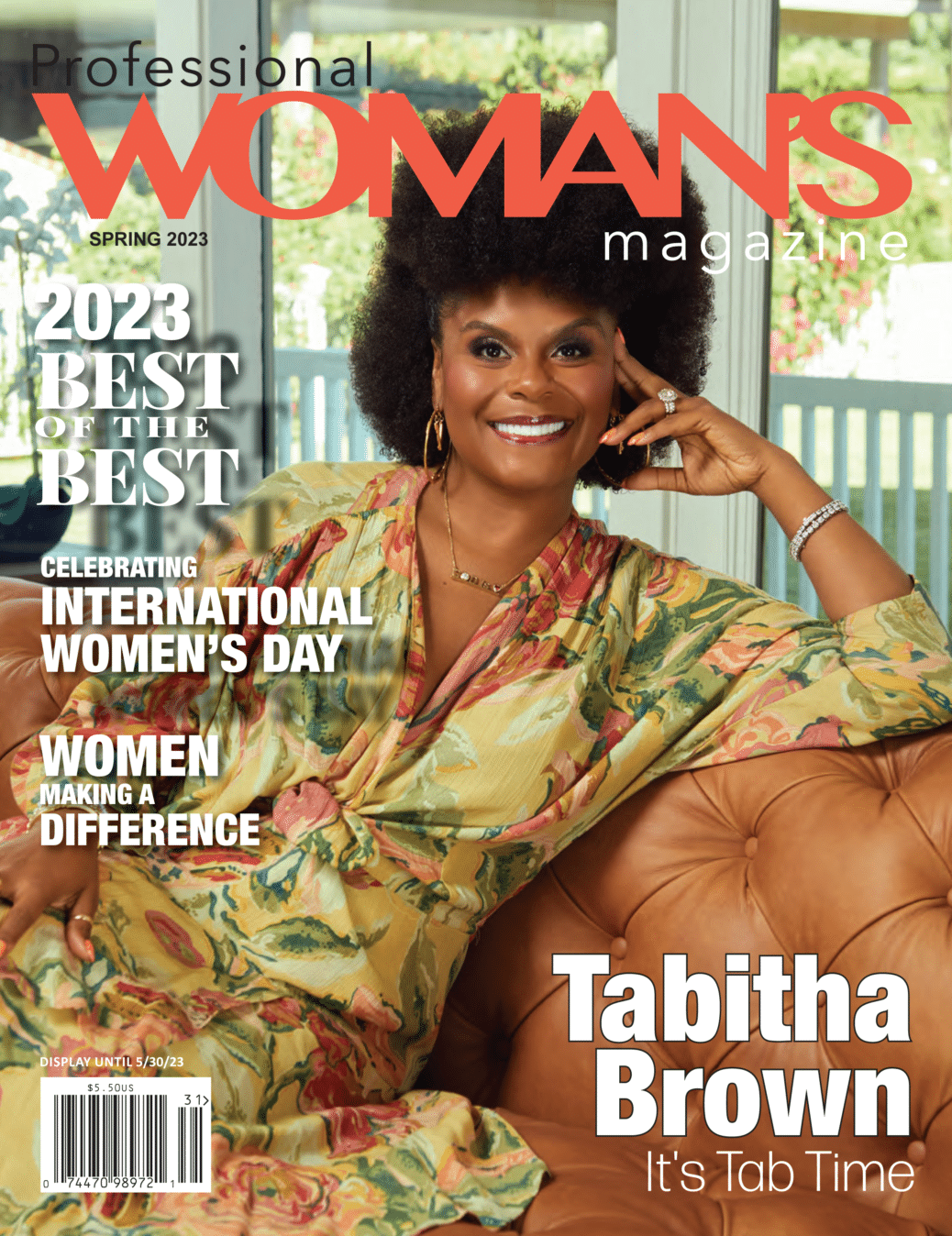
Earlier in March, Tabitha Brown and her husband, Chance Brown, posted an episode of their YouTube series, “Fridays with Tab and Chance.” In the video, the two were wearing a sweater set from Brand Avenue — a marriage lifestyle apparel brand.
Within a short period of time, the Black-owned business’ revenue started booming.
Co-founded and launched in 2014 by Marc and Ima Carnelus, the two shared that prior to being featured on Brown’s channel their business had been struggling for six months. From March 3 to March 9, the brand only made around $200 for the week.
“We even considered shutting the business down altogether,” Marc openly shared in an Instagram post. “This is our main source of income and it’s been super tough.”
Ima added, “We have been praying in the midst of all that for a breakthrough, for a sign to keep going, a miracle. We’ve had people really rallying around us, supporting us, praying for us, helping us financially because we still got bills to pay. And God answered our prayers.”
A week after their flatline in sales, their business blew up overnight from the Browns’ video posting.
From March 10 to March 16, the entrepreneurs made over $23,000 — and the sales are still going up.
“This is the Tabitha effect,” Marc emphasized.
“I love this so much and it’s just another reason I can’t wait to bring back Very Good Mondays!!! So happy for you guys @brandaveclothing,” Tabitha Brown shared on Instagram. “Keep believing and keep trusting God, he got you!!!!”
Back in 2020, she started the Very Good Mondays series to feature and support small businesses.
The video that sparked Brand Avenue’s sales isn’t the first time Brown has shown love to Brand Avenue.
View Tabita Brown’s exclusive cover story in Professional WOMAN’s Magazine!


By Betsy Leatherman
My husband and I have an arrangement that’s become increasingly common in the U.S.: I work outside the home, and he manages the home front, taking on the brunt of domestic and childcare duties. We’re in good company: Some 30% of married women out-earned their husbands, according to pre-pandemic statistics. When you factor in single mother-headed households, the share of female high earners climbs even higher: More than four in 10 working mothers have been their family’s sole or primary source of income.
But when you look at how much of corporate America functions, you’ll find that companies just aren’t doing enough to account for this reality. And the pandemic only made it worse, with too many organizations failing to adequately support female heads of households at such a challenging time. Frustrated, stressed and overwhelmed, some women quit their jobs despite their roles as primary providers, becoming among the nearly 1.8 million women who opted out of the workforce during the pandemic.
The good news? It’s never too late for businesses to improve ineffective, outdated working methods. Here are three steps leaders and companies can take to help women thrive in their careers as they support their families.
Recognize and respect boundaries
Even if a breadwinning woman has a spouse who shoulders much of the domestic load, that doesn’t mean she’s available for calls at any time of the day or night. For instance, it’s become increasingly understood that in families with children, regardless of the primary source of income, both parents want to spend time with and do things for their kids, whether cooking breakfast or walking them home from school. Sometimes certain things are best-taken care of by one parent or the other, depending on their skills or talents. I’m the go-to person in my house for Spanish homework help — I speak the language; my husband doesn’t. When my kids needed to be homeschooled in Spanish during the early days of the pandemic, I took time out of my day to help them conjugate their verbs.
I’m fortunate that my company gave me the flexibility to do that. Too many don’t. In fact, the new work-from-home model has, in some cases, raised expectations for employees to be more accessible for business meetings and calls, even on weekends. I’ve heard of older male leaders with grown children scheduling calls for Saturday mornings, much to the consternation of their female colleagues who had plans to attend gymnastics meets or baseball games during those times.
Of course, companies and managers can’t define what times are off-limits for breadwinning women and employees in general. It can be different for everyone. Here’s a solution: Before you assume, just ask. And when you learn a specific time of day is going to be problematic regularly — say, 8 a.m. is reserved for walking the dog, or 3:30 p.m. is school pick-up time — make a point of accommodating such schedule constraints as often as possible.
Champion professional development
Managers invested in the continued growth of their staff — and by extension, their company — understand the significance of professional development. But corporate America, historically, has an abysmal track record of genuinely giving women, especially leaders and high-earners, what they need.
Many driven female employees feel pressure to overachieve in every aspect of their personal and professional lives. These women need programs that offer guidance on everything from how to avoid burnout to a more productive approach to learning from mistakes — in other words, how to stop beating themselves up. Such programs should include mindset and skills training, with direction on shifting from a reactive to a proactive orientation in their work. When female leaders integrate what they learn into their management styles, they’ll be in a better position to flourish, which will, in turn, pay major dividends for their companies.
Establish meaningful connections
This is the easiest step but is all too often overlooked: Take time to get to know your colleagues — and show you care. As managers, in our focus on getting right down to business, we sometimes fail to see the inherent humanity in those we engage with every day. But in stressful times — and let’s face it when are times not stressful for high-achieving female high-earners? — taking just a few minutes to engage in meaningful conversation about something other than work can make all the difference.
For example, before any video call or business meeting starts, my boss never fails to first ask me about my boys. He does so because he recognizes that my family is the most important thing in my world and central to my well-being. On the surface, this act of acknowledgment may seem inconsequential, but these icebreakers make me feel seen and respected. It cements my appreciation for him and my entire organization. It makes me want to work that much harder. Leaders who make such small but powerful gestures can build trust with their employees, raise morale and create a healthier work environment.
The steps I’ve outlined can go a long way in supporting all employees, regardless of gender or breadwinning status. But they’ll be especially helpful in improving the professional and psychological well-being of the women who are the primary or sole earners in their homes. So many have had to scale countless hurdles to attain their current positions. Going forward, let’s make it easier for them to succeed.


As CEO and President of the National Minority Supplier Development Council (NMSDC), Ying McGuire leads efforts to advance business opportunities for more than 15,000 certified minority business enterprises (MBEs) connecting them to over 1,500 corporate members generating over $400 billion in annual revenue - more than 28% of all minority business revenue in the U.S.
NMSDC’s first Asian American Pacific Islander (AAPI) CEO and president brings over two successful decades of leadership experience across both the for-profit and nonprofit sectors and has an aspirational goal of achieving $1 trillion in NMSDC-certified MBE annual revenue generation.
NMSDC CEO and president, Ying McGuire has an awe-inspiring story of her own. Arriving to the United States from China with one suitcase and $1,000 to pursue her American dream, Ying did not have an easy path. McGuire immigrated from China during a tumultuous period in that country’s history.
“In the wake of the Tiananmen Square incident in 1989, I packed my life into one suitcase with $1,000 and came to the United States to pursue my American dream,” she recalled. “Being a new immigrant with little English, no money and no support system, I overcame mountains of obstacles, learned to get things done with limited resources and built up my resilience.”
She built a successful career as a corporate leader at Dell Technologies, driving the strategy and execution that nearly quintupled Dell’s diversity spend from $640 million to $3 billion within three years. After the murder of George Floyd in 2020, Ying felt compelled to be part of the growing social economic justice movement. She transitioned out of her tech role and became the first Asian American Pacific Islander CEO and president of NMSDC, with goals of accelerating MBEs and helping close the racial and economic wealth gap in communities of color.
Ying believes that the fastest path to achieving NMSDC’s $1 trillion plan requires a catalyst event to garner amplification and support the goal from prominent corporate C-level leaders, policymakers, high growth MBEs, thought leaders, and media. Therefore, NMSDC is hosting the second annual Minority Business Economic Forum on May 8-10, in Miami. This by invitation only event is focused on tapping into the top leaders of corporate America, the Administration, local governments, thought leaders, and academic leaders to come together and recalibrate the MBE narrative as an integral part of the American economy.
ABOUT YING MCGUIRE
To learn more about NMSDC, visit nmsdc.org.


Interviews are one of the basic steps to securing the job you want. They are your chance to sell your skills and abilities, which allows you to find out if the job and company are right for you. To ace your interviews, follow these simple and highly effective tips:
Review common interview questions. Practice answering them with someone else or in front of a mirror.
Come prepared with stories that relate to the skills that the employer wants while emphasizing your:
Figure out in advance how well you qualify for the job. For each requirement listed in the job posting, write down your qualifications. This process can signal if you lack a particular skill. Plan how you will address this in the interview to communicate that you can learn the skill.
Make a list of questions you would like to ask during the interview. Pick questions that will demonstrate your interest in the job and the company. You can comment on information sourced from the company website and then ask a related question. Also, ask questions about the job you will be expected to perform, like:
Be prepared. Remember to bring important items to the interview:
On the day of the interview, remember to:
Display confidence during the interview, but let the interviewer start the dialogue. Send a positive message with your body language.
End the interview with a good impression. A positive end to the interview is another way to ensure your success.
Don’t forget to send a thank-you note or letter after the interview
A thank-you note is another opportunity to sell your qualifications and leave a positive impression on the employer. A handwritten or typed thank-you note sent by mail is an excellent choice. However, you can also deliver your thanks in person or by phone. If time is short, an e-mailed thank-you note works too. The best approach will depend on the circumstances. Your message should include:
Source: CareerOneStop


If you’re looking to become a women-certified business enterprise (WBE), you may have a lot of questions about the process or if it’s even worth it to go through the application process?
To help you decide, the Black EOE Journal (BEOEJ) sat down with two amazing women-certified business owners — Angela Randolph, founder and CEO of Stellar Ledgers LLC and Dr. Pamela Ellis, MBA, PhD, founder of Compass College Advisory — from the Women’s Business Enterprise National Council (WBENC) who spoke about the benefits and advantages of getting certified.
Angela Randolph, founder & CEO, Stellar Ledgers LLC:
BEOEJ: What is Stellar Ledgers and how did you get started?
Angela Randolph (AR): Stellar Ledgers® (SL) is a virtual financial advisory firm that partners with clients as their business grows, offering an exceptional and value-added experience. SL offers bookkeeping, CFO/ controller, financial coaching and consulting services to business owners across the United States. The outsourced financial service we provide helps businesses improve cash flow and maximize profits as they prepare for growth and expansion. We provide the timely, accurate financial data and advice required for growth and scalability in the business. We also help prepare businesses for funding or investment opportunities.
I started the business in 2017 on the side while working full-time bootstrapping to fund operations. I am really passionate about helping fellow women entrepreneurs gain financial freedom, security and build wealth leveraging their businesses.
Dr. Pamela Ellis, MBA, PhD, founder of Compass College Advisory
BEOEJ: What is Compass College Advisory and how did it get started?
Dr. Pamela Ellis (PE): Some parents saw the success of my children and how they participated in educational programs after school and during the summers. When they asked me to help them with their children, that’s when my business started. At first, I helped those parents find the right summer programs, then the right high school, then the right colleges. I based my program off my dissertation research on high school to college transition (what supports students with navigating high school then thriving in college and completing).
Largely through word-of-mouth referrals, my business grew across the country. I met with families virtually who were in other states and opened a small office in Dayton, Ohio for locals. Our center is named Compass College Advisory.
Twelve years later, I am still partnering with parents to help their teen find the right colleges and get scholarships. The results of our work are that 95 percent of our clients have been admitted to their top-choice colleges and the average scholarship is $75,000.
BEOEJ: How did you learn about small business certifications for women and minorities? Why did you decide to pursue certification and which ones have you received?
AR: I first learned about certifications through my local Small Business Development Center (SBDC) Procurement Technical Assistance Center (PTAC) Advisor with University of Houston. I decided to pursue these certifications with plans to do business with the government, corporations and other certified businesses expanding my reach and adding multiple revenue streams to Stellar Ledgers. I am an MBE with Houston Minority Supplier Diversity Council (NMSDC), City of Houston, Metro, and a WBE through WBEA (WBENC), City of Houston, WOSB with the Small Business Administration and HUB with the State of Texas.
PE: My mom, who sharecropped and only had an opportunity to finish eighth grade, wanted me to stay home after high school. She reluctantly agreed to let me go to a college that she had never heard of. When we took the Greyhound from Memphis, Tennessee to Palo Alto, California, she gave me $70 to cover my expenses for the first year. I thought that was good money until I went to the bookstore the very next day and my books for the first quarter were $350.
I knew my mom couldn’t afford to send me anymore money. I immediately found a job and ended up working 30 hours per week during the school year and up to 100 hours per week in the summers. I had known since high school that I wanted to attend business school, so I decided to apply right after undergraduate to The Tuck School of Business at Dartmouth College. Tuck had recently started a professional development program for Black entrepreneurs. I was selected to work in that summer program before, during and after graduating from Tuck. During that experience, I learned about minority and women certifications.
When I started my business many years later, I attended every program I could find. Many of those programs were offered by the Small Business Development Center, SCORE, SBA Urban League and numerous others. The certification organizations would present during those programs and that’s how I then started to learn more about why I also should be certified.
I have received WBENC, MSDC, plus the respective state certifications and decided to do so in order to network, grow my business and develop strategic partner relationships.
BEOEJ: What were your trials and tribulations on the road to certification? How has certification helped your business?
AR: I didn’t have any issues at all with certification. I have an audit background so my records were in top shape and that made submission seamless. The certifications definitely add business credibility and more exposure to contract opportunities, development programs and fellow certified businesses who I can potentially collaborate with or who can become clients.
PE: Wearing too many hats was my biggest trial on the road to certification. Because I answered the phones, handled client delivery, tracked by books, etc., it was hard to keep up and prioritize my time. Since becoming certified, I’ve been able to participate in courses through WBENC that have helped me sharpen my hiring and delegation skills.
The certifications have opened opportunities for me to “be in the room” and gain contracts. With the certifications, my company has steadily grown over the years. Likewise, I’ve been able to participate in their professional and leadership development programs that have helped me with strategic planning, marketing and hiring. The investment has been worth every penny.
BEOEJ: What perks have you embraced from being certified, for example, have you used any of the mentors, peer-to-peer resources, financial advice, attended conferences or conventions, etc.?
Randolph: Yes, there are so many benefits to being a certified business. I’ve successfully completed business development and leadership training sponsored by the Houston Minority Supplier Development Council (HMSDC) that was invaluable, I am currently a member of cohort 41 of Leadership Houston sponsored by WBEA and so many other mentoring programs I’ve had the privilege to participate in. I’ve also led training workshops for fellow certified businesses in accounting and tax. I’ve attended conferences and conventions for both HMSDC and WBEA, both with great speakers and opportunities to network with others.
Ellis: I’ve attended conferences and special courses for continued learning and utilized the peer-to peer resources. During COVID-19, WBENC offered an amazing program called WEThrive, which gave me an opportunity to work on my business, rather than in my business, during a critical transition for us all. I received encouragement from the other participants to keep dreaming and implementing.
BEOEJ: If you could offer one piece of advice for women business owners thinking about certification, what would you say?
AR: I would definitely encourage women business owners to get certified. It can really open so many doors of development, support and opportunity. Start now by organizing your financials, tax records and business entity documentation so the process can go more smoothly.
PE: The paperwork may feel overwhelming. To get it done, block out a three-hour appointment with yourself to focus on gathering the documents, put on some energizing, feel-good music and get it done. The hardest part is getting started. Once you do so, it’s not so bad. Plan ahead for the notary. Keep digital copies of all the documents you upload. Mark your calendar for nine months away to renew, so that your certification remains current. It’s all worth it. You’ve got this!
To read more from from Black EOE Journal and other diversity-focused publications visit, diversitycomm.net


Have you ever heard the following mantra, it is repeated so often it almost sounds like a truism?
“Former employers direct all reference checks to their Human Resources departments, and those people won’t say anything negative about me.”
Not only does this statement frequently prove untrue, it sometimes misrepresents what HR can – and will – divulge about former employees.
7 Ways HR Can Give a Bad Reference without giving a bad job reference:
1. Stating that someone is not eligible for rehire, without offering details.
2. Suggesting that a legal file or similar venue would have to be examined to offer an opinion.
3. Offering employment dates/title and adding that they don’t wish to discuss the former employee further.
4. Explicitly offering negative commentary that – depending on the laws of that state – could conceivably be considered as legally legitimate.
5. Acting surprised / shocked and asking if we are certain they gave this contact as a reference.
6. Suggesting we check this person’s job references very carefully
7. Offering commentary in a tone of voice indicating hesitancy, guarded remarks, or otherwise implying unrevealed negativity.
Here’s How HR Can Give a Good Reference without Giving a Good Reference:
1. We really miss xxx – wish he / she would return.
The Truth:
Most Human Resources professionals will follow proper protocol in confirming employment dates and title (only). However, in addition to WHAT is said, reference checkers also evaluate HOW something is said. In other words, they listen to tone of voice and note the HR staffer’s willingness to respond to their questions. Both are critical factors in reference checks - how will your employment be reflected in their responses?
Note there are no federal laws that address what an employer can – or cannot say – about a former employee. As mentioned above, some states allow “qualified immunity” to employer commentary provided it is considered truthful and unbiased.
About Allison & Taylor, The Reference Checking Company
Critical when seeking a job or promotion.
Consider checking and validating your former employment references. Don’t lose a promotion or job opportunity due to mediocre or bad job references.
JobReferences.com, powered by Allison & Taylor, The Reference Checking Company will call your former employer to obtain your references, document the results and provide a report to you.


A cover letter is a one-page document that supplements your resume. Though they may not be required for every job you apply to, including a short letter to accompany your resume is an excellent way to help you stand out in the application process. Your application materials should look like they belong together visually. If you take the time to write a cover letter, be sure the style matches your resume. Remember, a generic cover letter is not worth your time. Make it personal, or don’t do it at all.
Why Should I Write a Cover Letter?
A cover letter lets you tell your employment story with some freedom to express yourself. You can explain your qualifications more fully. Clearly state why you are a good fit for the position and the company. You want to demonstrate an understanding of the specific challenges this company is facing and how you are prepared to add value. Keep this document to one page in length, max. If you can make your point in fewer words or paragraphs, do it.
The Cover Letter Structure
A cover letter, like your resume, should be developed individually for the position and company where you are applying. Remember, a great paragraph needs to have at least three complete sentences — a topic sentence and two supporting statements. The best structure for a cover letter can be described as the following:
Types of Cover Letters
While a generic cover letter is effective much of the time, you may want to consider one of the following types of cover letters depending on the nature of your application:
Remember, cover letters, much like a resume, are supposed to be brief and informative. Use the cover letter to show off your ability, talent and capabilities, but don’t worry about including every tiny detail in your letter. Give it a try and best of luck!
Sources: Ohio Means Jobs, CareerOneStop


In a stunning victory, Michelle Yeoh took home the trophy for best actress at the 2023 Oscars on Sunday. The Everything Everywhere All at Once actress made history as the first Asian American to win the category and the first woman of color to receive the award in two decades, following Halle Berry, who was the first Black woman and woman of color to win the Academy Award in 2002 and presented Yeoh with her history-making win tonight.
“To all the little boys and girls who look like me watching tonight, this is a beacon of hope and possibilities,” Yeoh said in her acceptance speech. “This is proof that dream big and dreams do come true. And ladies, don’t let anybody tell you you are ever past your prime.”
She added: “I have to dedicate this to my mom – all the moms in the world – because they are really the superheroes, and without them, none of us would be here tonight. She’s 84, and I’m taking this home to her. She’s watching right now in Malaysia with my family and friends. I love you guys. I’m bringing this home to you and also to my extended family in Hong Kong, where I started my career. Thank you for letting me stand on your shoulders giving me a leg up so that I can be here today.”
Yeoh has been a force in filmmaking since the Eighties, rising to fame for her starring roles in action films Police Story 3: Supercop, James Bond movie Tomorrow Never Dies, and international sensation Crouching Tiger, Hidden Dragon by Ang Lee. And while Yeoh has been an icon and prolific actress and stuntwoman for decades, her performance as Evelyn Wang in the 2022 film Everything Everywhere All at Once garnered long-deserved accolades from several largely white institutions.
In January, the beloved actress accepted the Golden Globe for Best Actress in a Musical or Comedy and shared a touching speech about the impact of her win for the role of Evelyn Quan Wang in Everything Everywhere All at Once. “I’m holding onto this,” Yeoh said as she held up her trophy. “It’s been an amazing journey and incredible fight to be here today. But I think it’s been worth it.”
Click here to read the complete article on Rolling Stone.